If you come in costume, you get free admission! Get it here.
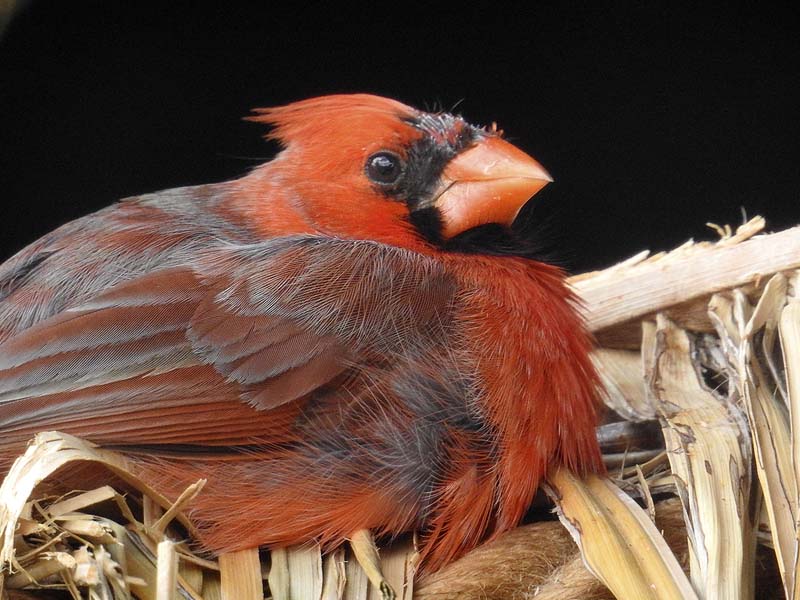
The northern cardinal (Cardinalis cardinalis) is a songbird native to Central and North America, where it inhabits forests, wetlands and urban areas, where it finds food easily. It takes its name from the colour of the robes worn by cardinals in the Catholic Church and because it is the only one of the three cardinal species found in the northern hemisphere.
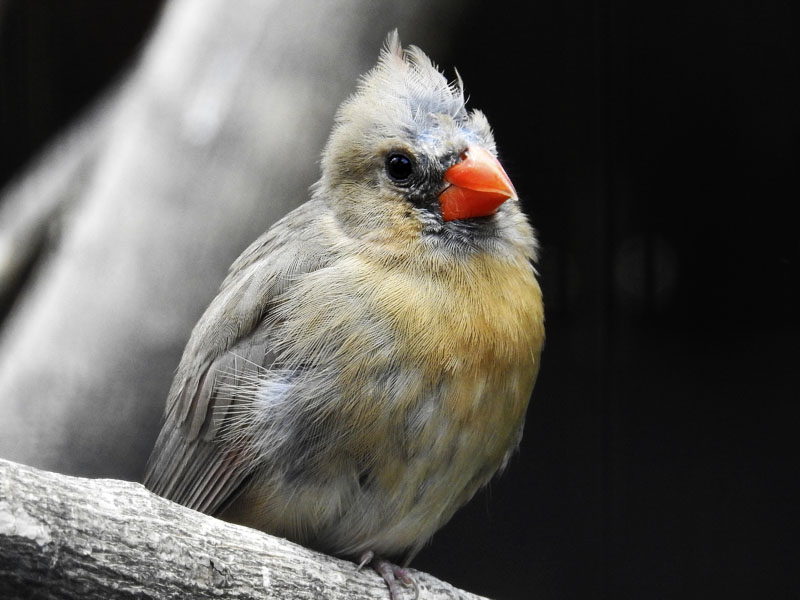
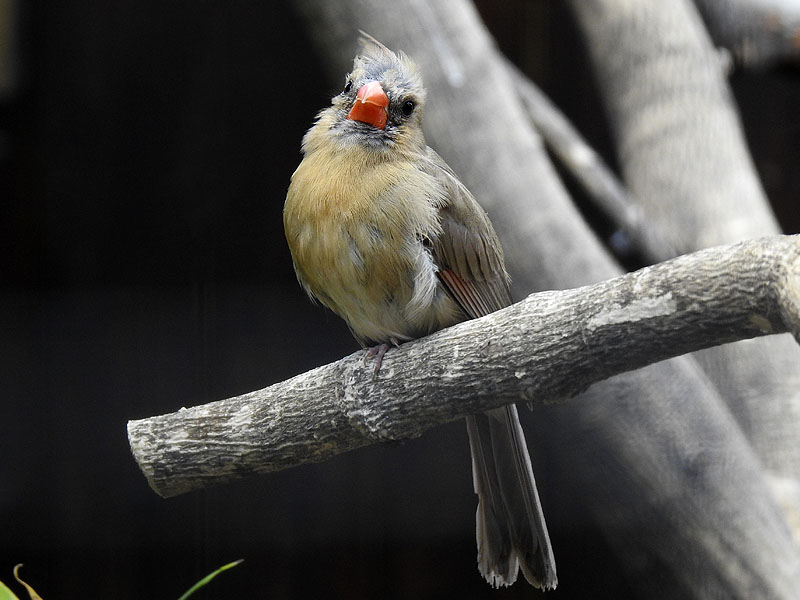
The northern cardinal, in which both sexes have a prominent crest, exhibits marked sexual dimorphism that distinguishes males from females. Whilst juveniles resemble females, in males the plumage changes after the first moult, allowing their adult plumage to develop. In this species, the female is light brown with dark or grey markings and has reddish highlights on her wings, crest and tail, whilst the ‘mask’ surrounding her eyes and beak is not particularly pronounced. On the other hand, the male is a bright crimson colour, darker on the wings and back, and has a black ‘mask’ around the eyes and beak that extends to the upper breast. The male’s characteristic colouration is due both to the red pigments in his diet and, unlike the female, to the conversion of the yellow carotenoid pigments in his food into red.
Although the red cardinal forms flocks, even with birds of other species, during the breeding season it splits into monogamous pairs, with the males displaying territorial and defensive behaviour. Both males and females sing with distinct patterns of repetitive sounds, which differ between individuals and sexes and, as they are learned, vary between regions. The male sings to defend his territory throughout the year, intensifying this behaviour to attract a mate in spring. To communicate with her mate, the female also sings from the nest, indicating when to bring food for the chicks, mainly insects. The most characteristic sound of this species is a brief, metallic-sounding call emitted in response to danger, with greater frequency and intensity depending on the threat, such as the presence of goshawks, magpies, squirrels or snakes near the nest.
The northern cardinal is extremely popular, serving as the representative bird of at least seven US states, the mascot of universities and sports teams, and even featuring in video games. Although it is a non-threatened species that has adapted easily to life in urban environments and residential areas—which has benefited its survival—it is protected by various laws in Canada and the United States, with its sale prohibited despite the fact that in the past it was highly prized as a pet due to its attractive song and bright colours.
The high mortality rate among chicks and young birds, as with other birds, means that their average lifespan is only around one year. If they survive natural predators, human-caused threats, the weather and disease, it is estimated that between 60% and 65% of adults survive each year, living to an average of three to five years.