If you come in costume, you get free admission! Get it here.
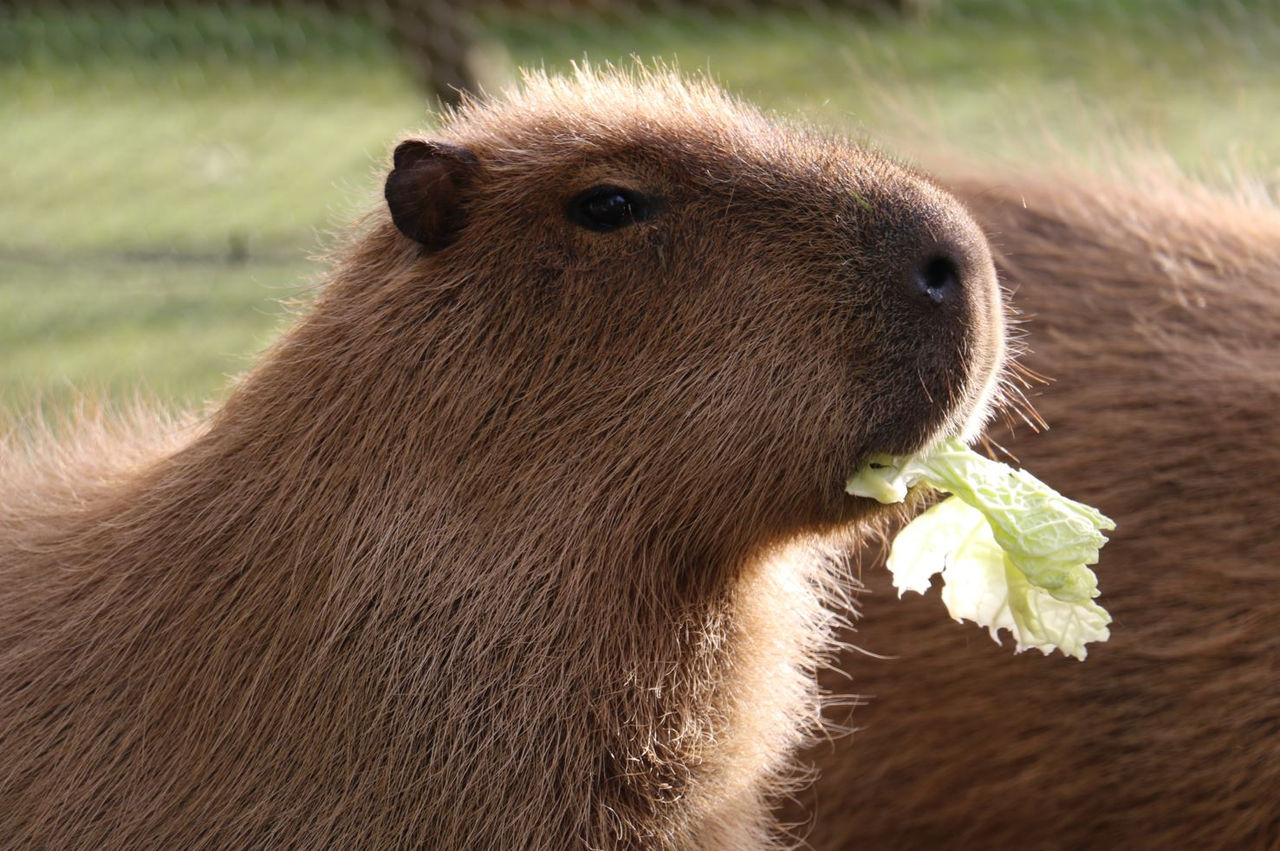
The capybara (Hydrochoerus hydrochaeris), native to South America, is the largest rodent in existence today. Its name comes from indigenous words that can be translated as “grass eater”—a food source it finds in the aquatic ecosystems to which it is closely tied and where it also finds refuge and protection from predators. With a calm and very sociable nature, it lives in family groups and is known for its great ability to swim and dive, making it one of the most unique species in South American wetlands.
The capybara inhabits wetlands, rivers, lagoons, and floodplains or riparian areas of tropical forests. Its body is perfectly adapted to aquatic life, and it depends on proximity to water to regulate its body temperature, escape predators, and rest. The capybara’s anatomy includes partially webbed feet that allow it to move easily through the water. Additionally, the elevated position of its eyes, ears, and nostrils enables it to remain underwater while monitoring its surroundings, and it can submerge itself for several minutes to hide from potential threats.
The capybara feeds primarily on grasses and aquatic plants, so it plays a vital role in maintaining the balance of the ecosystems where it lives. Although it is classified as “Least Concern” by the International Union for Conservation of Nature (IUCN), it is affected by the loss and degradation of wetlands, as well as by hunting for its meat and fur—factors that impact different populations in varying ways. The conservation of aquatic ecosystems is essential to ensuring the future of this iconic South American species.
The capybara’s calm demeanor and its ability to coexist with other species have made it one of the most popular and admired animals on the American continent. It typically forms family groups within which it communicates intensively through whistles, grunts, barks, and other sounds. This group lifestyle helps them detect potential threats and protect their young, allowing them to quickly take refuge in the water at the first sign of alarm or when they sense danger. Capybaras are generally calm, being most active in the morning and at dusk, and resting during the hottest hours of the day.