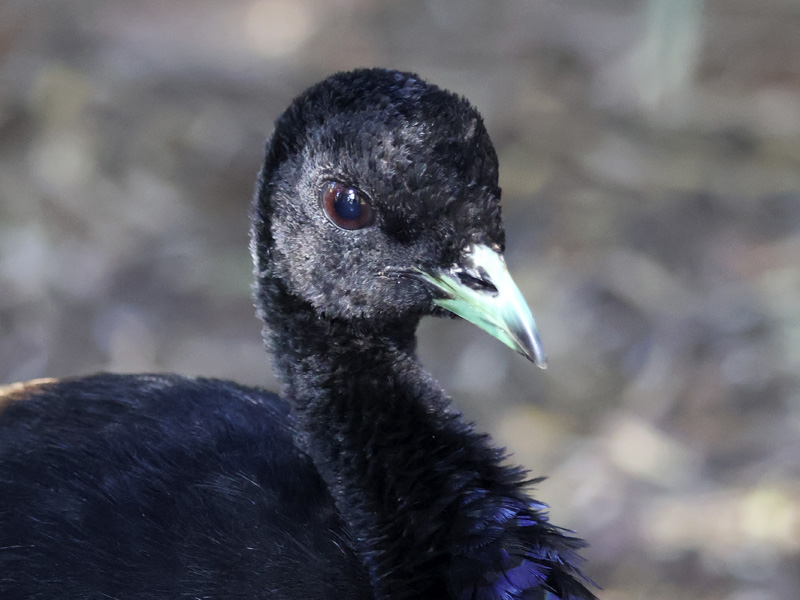
If you come in costume, you get free admission! Get it here.
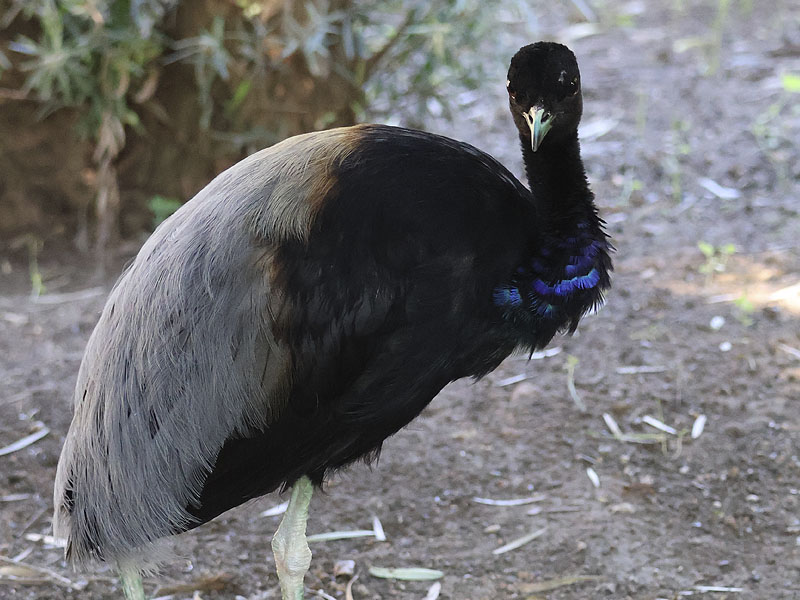
The grey-winged trumpeter (Psophia crepitans) inhabits the tropical rainforests of northern South America, particularly in the Amazon basin. Although it is capable of flight, it is a ground-dwelling bird that spends much of its life moving about on the forest floor in search of food.
Its common name derives from the distinctive low, resonant calls it makes, similar to the sound of a trumpet, which it uses to maintain contact with other members of its group. Furthermore, it has also been domesticated by indigenous peoples to serve as a warning against threats, living alongside poultry, and is believed to scare away or kill snakes.
The grey-winged trumpeter is distinguished by its elegant dark plumage with iridescent sheen and by the grey hues that give its wings their name. The grey-winged trumpeter lives in very close-knit family groups, where members cooperate to forage for food, detect danger and protect their territory. Thanks to its long legs and its ability to move through dense vegetation, it plays an important role in seed dispersal and in maintaining the balance of the forest ecosystem.
One of its most striking characteristics is its complex social organisation. Unlike many other birds, groups may consist of several adult individuals who collaborate in caring for the young. Furthermore, they have been observed following groups of primates to collect fruits, seeds and insects that the primates drop onto the floor as they move through the forest. This strategy enables them to find food more efficiently and demonstrates an interesting relationship between different species in the rainforest.
Although it is not currently considered a globally threatened species, its populations depend on the conservation of large areas of tropical forest. In certain regions, deforestation and habitat fragmentation may affect local populations. Furthermore, there is a certain risk that the species may become extinct due to hunting for its meat in certain areas, in contrast to others where it is very rarely hunted. The protection of the Amazon and other tropical forests is essential to ensure the survival of this unique bird and the many species that share its habitat.