If you come in costume, you get free admission! Get it here.
Important information: Due to technical adjustments, the main pool will be temporarily out of activities.

Book our Unique Experiences online!

Interactions with squirrel monkeys, penguins, giant tortoises... and much more! All the information here.

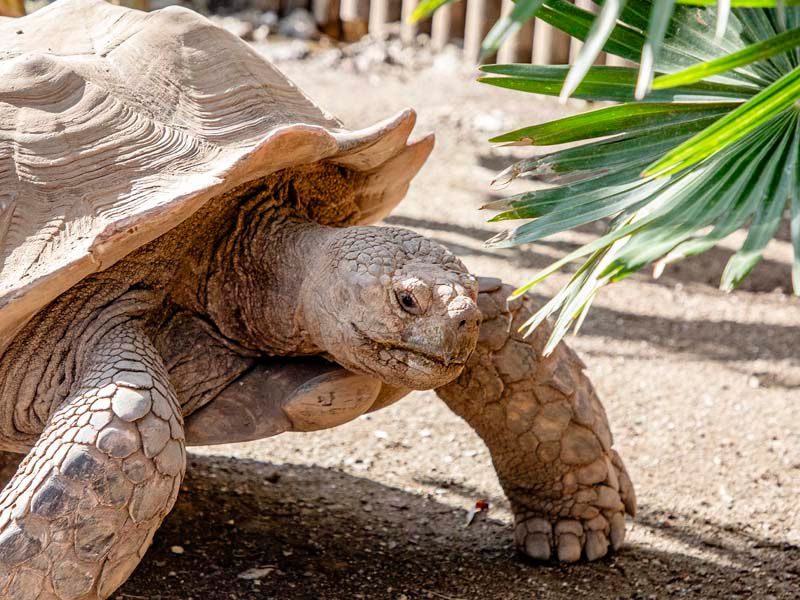
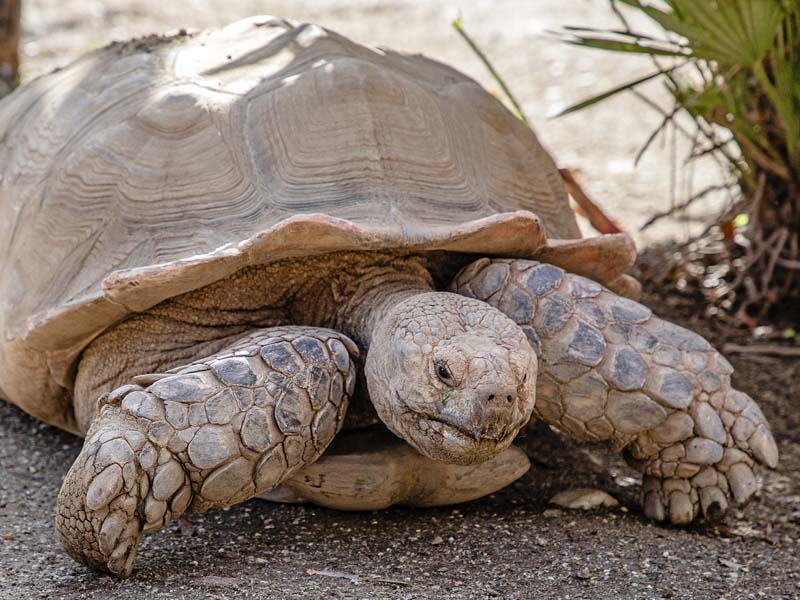
African spurred tortoise

Theme area:  Los Trópicos
Scientific name:  Centrochelys sulcata
Class:  Reptiles
Continent:  Africa
Habitat:  scrub and grassland in desert areas
Diet:  desert vegetation, such as succulents
Weight:  between 60 and 100 kg
Size:  between 45 and 85 cm
altphoto altphoto

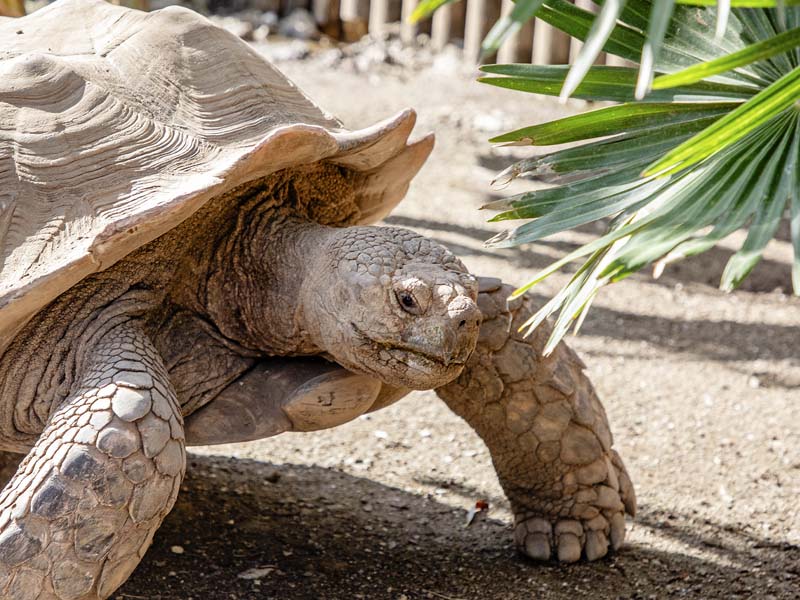
The African spurred tortoise (Centrochelys sulcata), also known as the grooved tortoise or the Sahel tortoise, is the sole member of its genus, whose name means ‘land tortoise’, and its specific name refers to the characteristic grooves in the scales of its shellsulcus, from the Latin root – which is highly domed and in which the marginal scutes point upwards in an almost vertical position. Its common name emphasises the hard, pointed spurs that help it to dig.

Due to its size, which can exceed 80 cm in length and 100 kg in weight, it is considered the third-largest land tortoise in the world and the largest of the continental tortoises, that is, those not native to archipelagos.

Habitat of the giant tortoise

The African spurred tortoise inhabits most of the Sahel, a geographical belt with its own distinct climatic and biological characteristics that spans thirteen countries and forms a natural transition zone between the Sahara Desert and the Sudanese savannah. This mainly flat area is characterised by semi-arid grasslands, savannahs and scrubland that serve as habitat for herbivores, predators and birds – with a greater presence during the migratory season – most of which have been reduced in number by overhunting and desertification.

Solitary and territorial in nature except during the mating season, it avoids the high temperatures during the day and takes refuge in burrows dug in the sand, being most active at dawn or dusk. The spur-thighed tortoise feeds on succulents, grasses or dry plants and, given that rainfall is scarce in its region, it obtains its water from the moisture present in its diet, relying on water metabolism processes, just like other animals adapted to long periods without drinking.

Threats and conservation status

Since 2020, the African spurred tortoise has been classified as an endangered species by the International Union for Conservation of Nature (IUCN), and it is estimated that between 50% and 75% of the population will disappear over the next three generations, in approximately ninety years’ time.

Recent studies show that it is one of the tortoises with the lowest population density in its native range, which hinders the recovery of its severely fragmented populations. In addition to habitat fragmentation and loss, which represent the greatest threat, there is the impact of climate change, hunting for its meat, the consumption of its eggs, and illegal trafficking for the pet trade or use in traditional medicine.

Conservation Status
Extinct
Extinct in the wild
Critically endangered
Endangered
Vulnerable
Near threatened
Least concern
Insufficient data
Not evaluated

DID YOU KNOW ...

it digs burrows up to 15 metres deep? A perfect refuge from the dry season’s temperatures of over 35°C!
FROM 2 YEARS
Family enjoying the Penguin Encounter at Selwo Marina
Penguin Encounter

Penguin Encounter

Online tickets from

€17.90

€15.90