If you come in costume, you get free admission! Get it here.
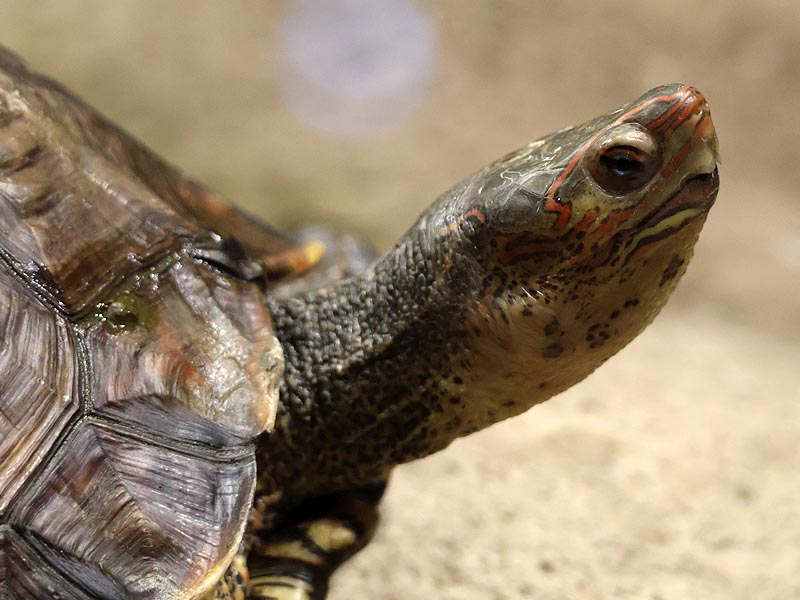
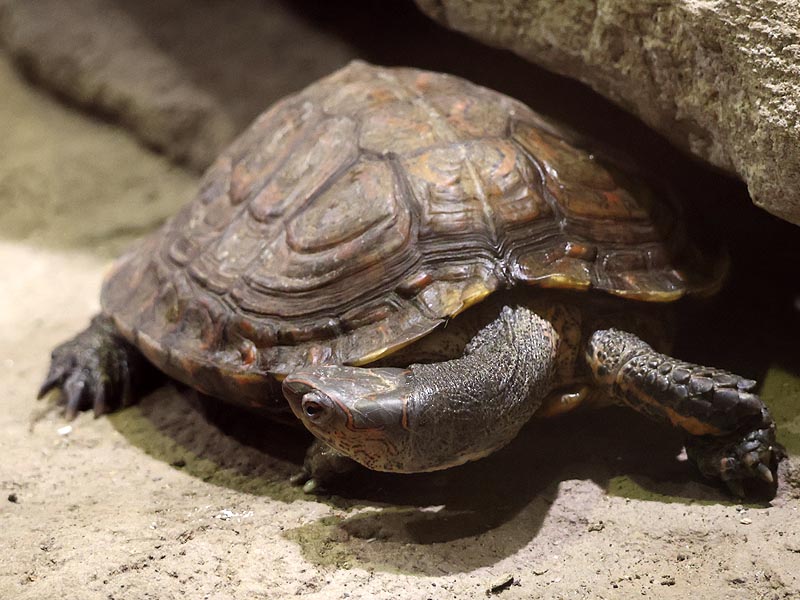
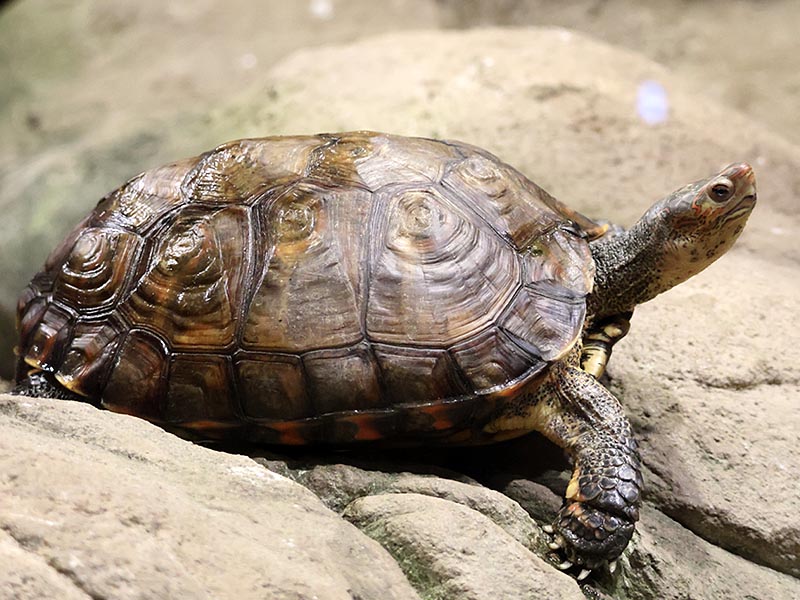
The painted wood turtle (Rhinoclemmys pulcherrima), also known in Spanish as the dragon tortoise due to the small crest running along its shell from head to tail, is easily recognisable by the red and yellow stripes on a dark background across its body, its swirling pattern on the shell, blending shades of orange and yellow, and the continuous ventral line on the plastron, the underside of its shell that protects its vital organs and regulates its temperature.
Colouration can vary between individuals, as well as between different subspecies. Juveniles have brighter colours, which gives them their name as ‘ornated’ turtles, with the intensity fading as they grow. There are four subspecies of painted wood turtle found in different countries of Central America; they are common in the wild and also as pets, which could affect the conservation of this species in the future.
Shy by nature, it inhabits tropical forests and prefers to stay out of the water, always feeding on land. Its omnivorous diet consists of herbs, shoots, seeds and fruits, as well as small invertebrates and insects.
During the nesting period, the female uses her hind legs to dig nests about 10 cm deep, a process that can take her around an hour; she then covers the nest with earth again after laying between one and three eggs. When they hatch, the hatchlings measure less than five centimetres in shell length. As adults, they reach twenty centimetres in length, with females being significantly larger than males.